Coconut’s blue eye widened as the grain bucket rattled. His lips wiggled, and a low nicker escaped his throat. The sound and scent of feed stirred an ancient memory: this is what it feels like to be nourished. When the ProForce Senior, mixed with Redmond Salt, Cough-Free, and CocoSoya, slid into his tub, he lowered his head, opened his mouth wide, and set his muzzle across the small mound as if to inhale the very idea of food. Then, gently at first, he began to eat, savoring what he had been denied for too long.
In the next stall, Comet worked more slowly. His lips sifted the grain as though each mouthful required careful negotiation. Coconut finished, lifted his head, and glanced toward his companion. Satisfied, he shifted his weight, tucked against the wall, raised a hind hoof, and rested — keeping watch as Comet continued to eat.
It was their first meal at Unbridled. Two strangers, now bound by hunger and reprieve.
Before the quiet of the Sanctuary, there was the confusion of the sale barn.
Every August, as summer camps close, the horses that carried children through lessons, trails, and games — patient animals who tolerated heavy saddles and small hands clutching reins — are dispersed. They are not retired with ceremony. They are moved through a supply chain. From camps to middlemen, from middlemen to auctions, from auctions to broker lots. The fortunate are purchased for use again. The unlucky begin the descent: kill pens, deadlines, slaughter plants.
Coconut and Comet passed through Unadilla, the first of several camp horse auctions in the country. Inside, horses were crammed into steel stanchions, shoulder to shoulder. The pressure of bodies sparked conflict. Hooves struck, ears pinned, teeth bared — not from malice but from fear. Even companions turned on one another in the crush. The air was thick with the reek of manure and sweat, the concrete slick beneath them.
The auctioneer’s chant thundered above it all, fast and relentless. Not cruel in tone — it was businesslike, efficient — but each syllable reduced life to inventory. Horses sagged against the rails, their eyes dulled by confusion. They could not name the system that had brought them here. They only knew that hands had let them go.
Comet’s story was etched into his hooves. Shoes nailed too tightly had been left on far too long. Every step was pain. When the farrier finally pried them loose after rescue, the metal clattered to the floor, a sound louder than the chant of the gavel. Comet tested the bare ground cautiously, then sighed — not with surrender, but relief.
Coconut’s suffering was written on his frame. His paint coat, striking even under neglect, hung over ribs sharp as rails. Years without deworming had left him hollow. And yet, his spirit was unbroken. His blue eye searched for contact; his muzzle reached for kindness. Even in the chaos of the stanchions, he remained alert, present, unwilling to disappear into despair.
They had not met until the night of their rescue. Loaded shoulder to shoulder into the trailer, the two carried no shared past. But in that moment, as the doors closed, they became companions in transit: one gray and slight, stiff with arthritis; one large and gaunt, animated still. Both cast off, both entering the unknown.
At Unbridled, their bodies began to soften into ease. Coconut greeted each feeding with animation — ears flicking, lips wiggling, eyes bright. Comet ate more cautiously, but with a growing assurance that the next meal would come. Hunger no longer ruled them.
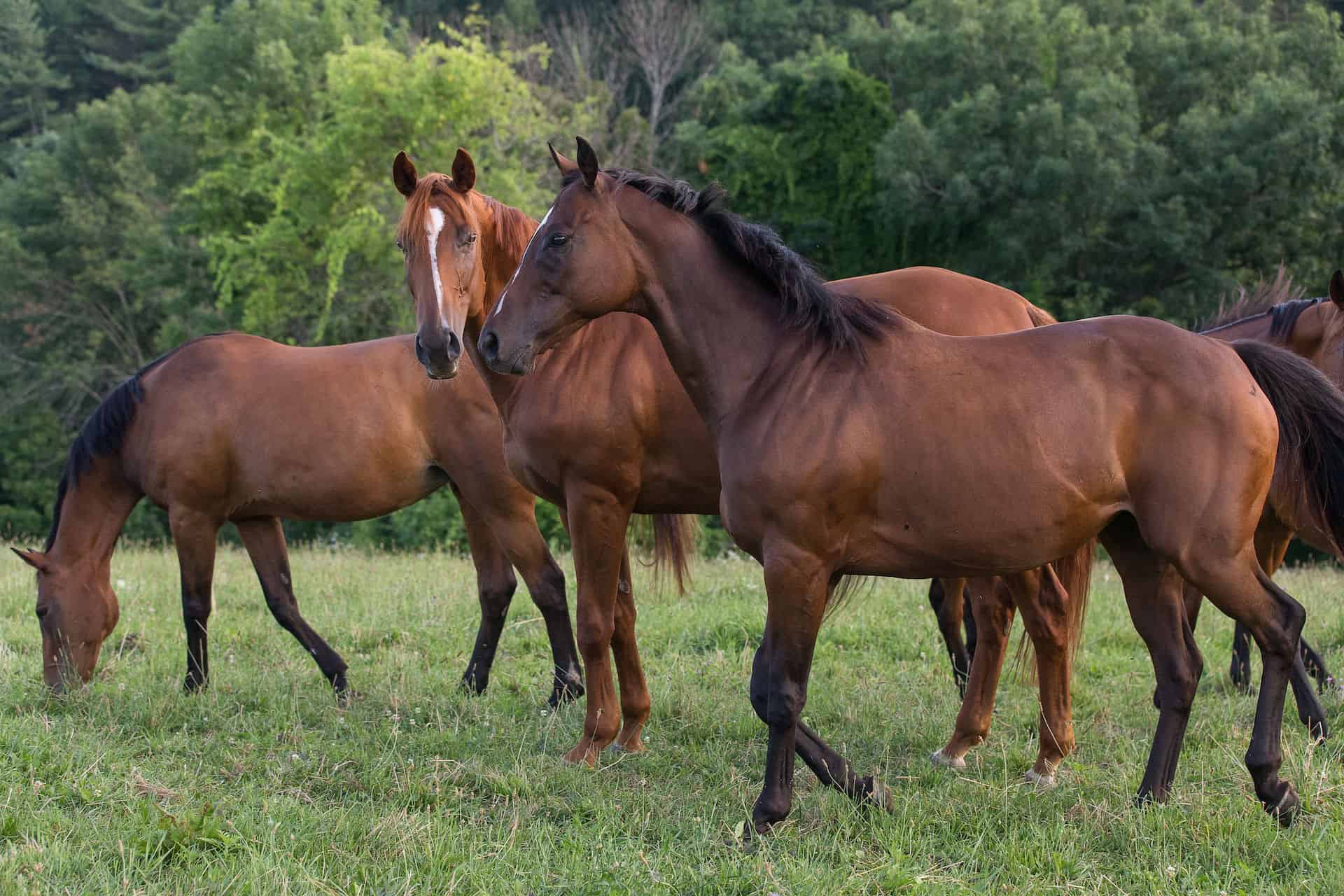
Soon they joined the fields. Coconut moved out front, confident, his leadership immediate. Comet followed a step behind, quiet, watchful, willing. Molly the mule joined, along with the three snow-white donkeys. Five animals who had once stood alone now grazed as a herd. They trimmed the hedgerows and edges together, their chewing, breathing, and footfalls folding into a single rhythm.
From the fence, the transformation is visible. Coconut lifts his head mid-graze, his blue eye fixed not on what has passed but on what lies ahead. Comet, free from his shoes, steps more comfortably on grass, his stride loosening. The simplicity of their movement belies the enormity of their survival.
At dusk, they rest side by side, muzzles nearly touching, their breath mingling in the cooling air. Not dominance. Not submission. A covenant. Two horses who had carried children’s dreams, endured indifference, and entered the machinery of disposal — now standing in quiet belonging.
Once they were hip tags: #136 and #112. Now they are names spoken in love: Coconut and Comet. And in the hush of sanctuary, they embody what every horse who arrives at Unbridled knows in his bones:
Forever starts today.